Case Study 4
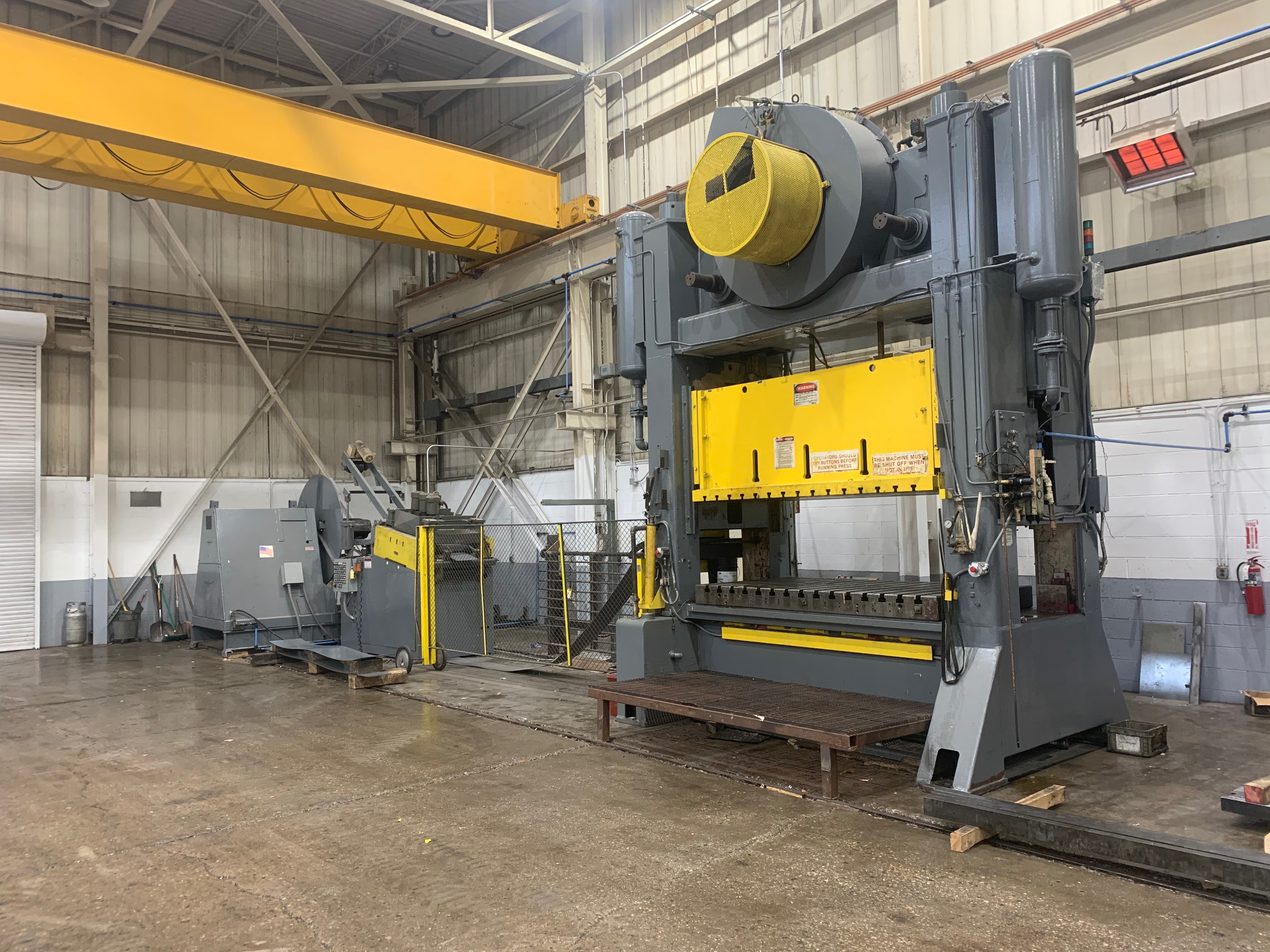
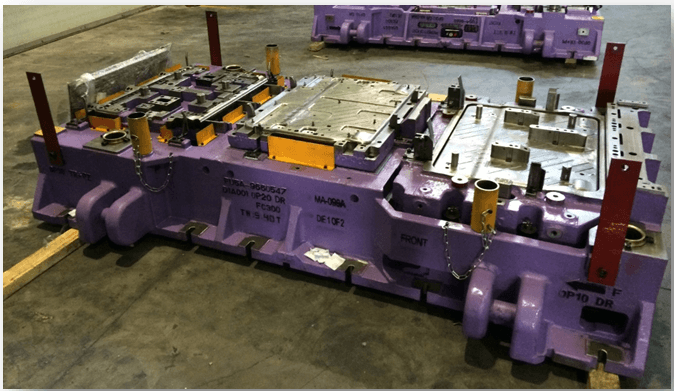
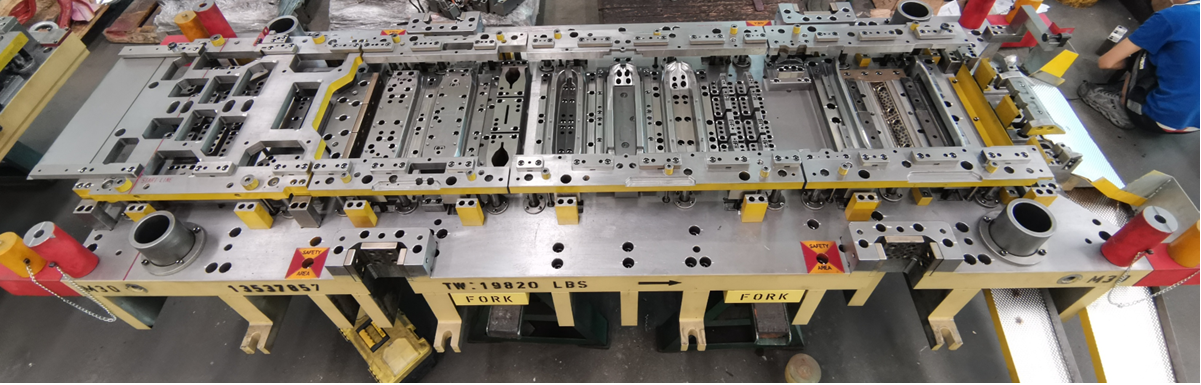
Advanced Stamping Material Forming Expertise
Advanced High Strength Steels (AHSS)
> 340 MPa
Min Yield Strength
0.5–3.0 mm
Typical Gauge Range
950°C
Hot Stamping Temp
±0.02 mm
Dimensional Tolerance
Executive Summary
Developed and optimized stamping strategies for high-strength automotive sheet materials to improve formability, control springback, reduce edge cracking, and support repeatable production of safety-critical structural components.
Materials in Scope
High energy absorption; good balance of strength and ductility
Widely used for structural parts with manageable formability
High strength and crash resistance with tighter forming limits
Ultra-high strength reinforcement material with limited ductility
Advanced grades for complex deformation and tailored performance
Key Forming Challenges
- Higher springback after unloading
- Edge cracking during trimming and flanging
- Elevated tonnage and accelerated tool wear
- Sensitivity to draw beads, radii, and lubrication
Business Value
Supports lighter body structures, stronger crash performance, reduced rework, and more robust launch readiness for high-strength stamped parts.
Engineering Response
- Material-specific die face compensation
- Blank and binder optimization using simulation
- Radius, draw bead, and restrike tuning
- Dimensional validation and production tryout loops
What is AHSS?
Advanced High Strength Steels (AHSS) are engineered steels that exploit complex multi-phase microstructures and metallurgical transformation mechanisms during stamping to achieve exceptional combinations of strength and formability — far beyond conventional high-strength steels.
1st Gen
DP, TRIP, CP, MS
340–1700 MPa
Established production
2nd Gen
TWIP, L-IP, SIP
800–1200 MPa
High-Mn austenitic
3rd Gen
Q&P, δ-TRIP, AHSS
Balanced
Balanced strength-ductility
vs mild steel enabling EV range gains
performance with thinner gauges
Life-cycle emissions reduced
Performance Comparison
Tensile Strength (MPa)
Total Elongation (%)
Dual Phase 980 MPa
Part Details
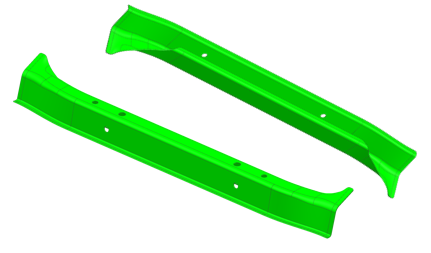
AHSS Material Mapping on BIW Structure
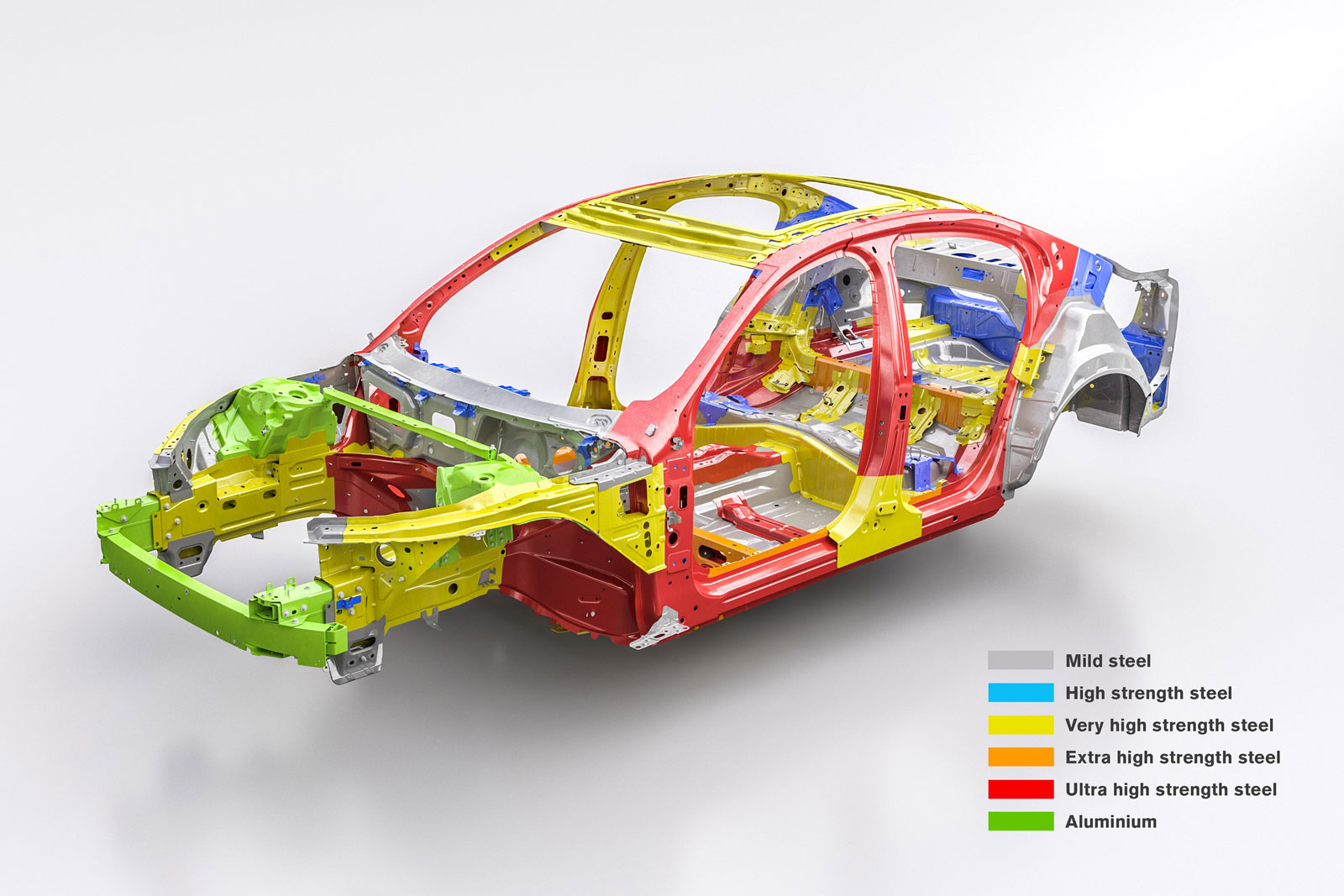
Dual-Phase Steel
Front rails,
floor cross members,
door inners
TRIP Steel
Rocker reinf.,
B-pillar lower,
crash load paths
CP Steel
Bumper beams,
seat cross members,
local reinforcements
Martensitic Steel (MS)
Door intrusion beams,
pillar reinforcements,
anti-intrusion parts
TWIP Steel
Selected side-impact
and energy-absorbing
reinforcements
Multi-Phase Steel
Rockers, rails,
structural brackets,
floor reinforcements
Note: This is a typical BIW application map. Exact grade placement varies by OEM, crash target, cost, joining method, and body architecture.